USB-C monitors: why nobody has a charger in meetings any more
The USB-C monitor solved charging at the desk. The charger left the bag, and every other room in the office was left without power.
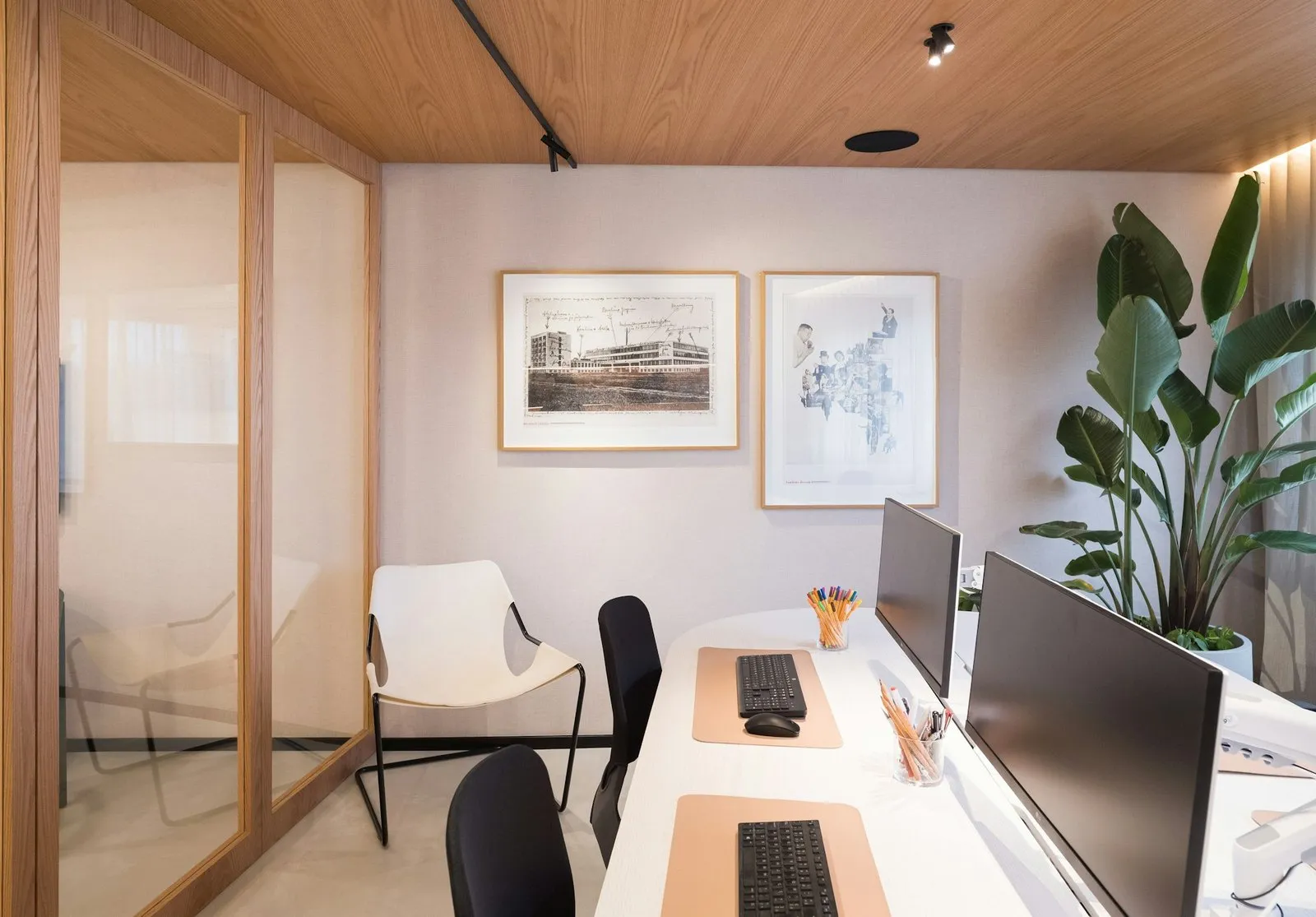
If your employees no longer have a charger in meetings, it is because of a step forward: the USB-C monitor. At the desk, a single cable drives the monitor and charges the laptop. So the charger stayed at home, and as soon as people leave their desk, the laptop can't charge anywhere.
The desk is the only place in the office where the power question is solved. It is also the place where people spend less and less time.
One cable that made everything simpler at the desk
Before USB-C, every desk had its charger plugged in under the desk, and every employee had a second one in their bag. With a USB-C monitor, one cable is enough: it carries the picture, the data and enough power to charge the laptop. You arrive, you plug in, and the laptop charges while you work.
For IT teams, this is real progress: a simpler desk, fewer cables, a single standard for every laptop.
The charger left the bag
Since the desk charges the laptop, the charger became unnecessary at the office. Many employees left it at home, for working from home. Nobody decided this: it is a logical reflex, and it took hold everywhere in a few years.
The result is simple. The laptop is charged when you leave your desk, then it runs down over the rest of the day, with no way of recharging it.
Every other room is left without power
Yet work no longer happens only at the desk. Collaborative spaces account for 60% of use, and fixed-layout meeting rooms make up the largest share. Then come work cafés, phone booths, informal spaces and training rooms.
In these spaces, there is no USB-C monitor. There are, at best, a few outlets along the walls. So the same scenes keep coming back:
- “Has anyone got a charger?” at the start of a meeting;
- the seat by the outlet, always taken first;
- a workshop left halfway through because a laptop is at 5%;
- chargers borrowed from the IT help desk that never come back.
The USB-C monitor solved charging at the desk. It moved the problem everywhere else.
Why putting chargers back solves nothing
The reflex answer is to buy more chargers or leave some in the rooms. They disappear within a few weeks, and the cost doesn't show up in any budget: we break it down in the hidden cost of chargers.
The other answer is to add floor boxes or table power modules (top access). It requires construction work, it fixes the layout and it only helps where it is installed. The office isn't short of outlets, it simply has them in the wrong places: that is the real office power problem.
What works: bringing power with people
The desk keeps its USB-C monitor, which works very well. For everything else, power needs to be able to move with the employee.
That is the principle of a shared battery network for the workplace, a kind of bike-share scheme for power. Stations, the Bases, are placed where people pass by. Everyone unlocks a battery there, a Pico, with their badge, takes it to the meeting and returns it to any Base on the way out. The Pico has a built-in USB-C cable and charges a laptop at up to 100 W, including the most powerful ones. It lasts a full working day.
More than a power bank, it is a self-service network: you work anywhere away from your desk, with no charger, no outlet, no construction work.
To find out how many Bases to install, and where, see our sizing method.
Frequently asked questions
Should USB-C monitors be removed from desks?
No. They remain the best solution at the desk. The Pico serves everywhere there is no monitor.
Do employees need to bring their charger again?
No. The charger can stay at home. At the office, Picos are available in shared spaces.
Does a Pico last through a whole meeting?
Yes. It charges over USB-C at up to 100 W and lasts a full working day.