The Next Workplace 2023: 5 lessons for the office of tomorrow
Three round tables, ten speakers and one conclusion: the office is no longer the default place to work. Key takeaways from the first The Next Workplace.
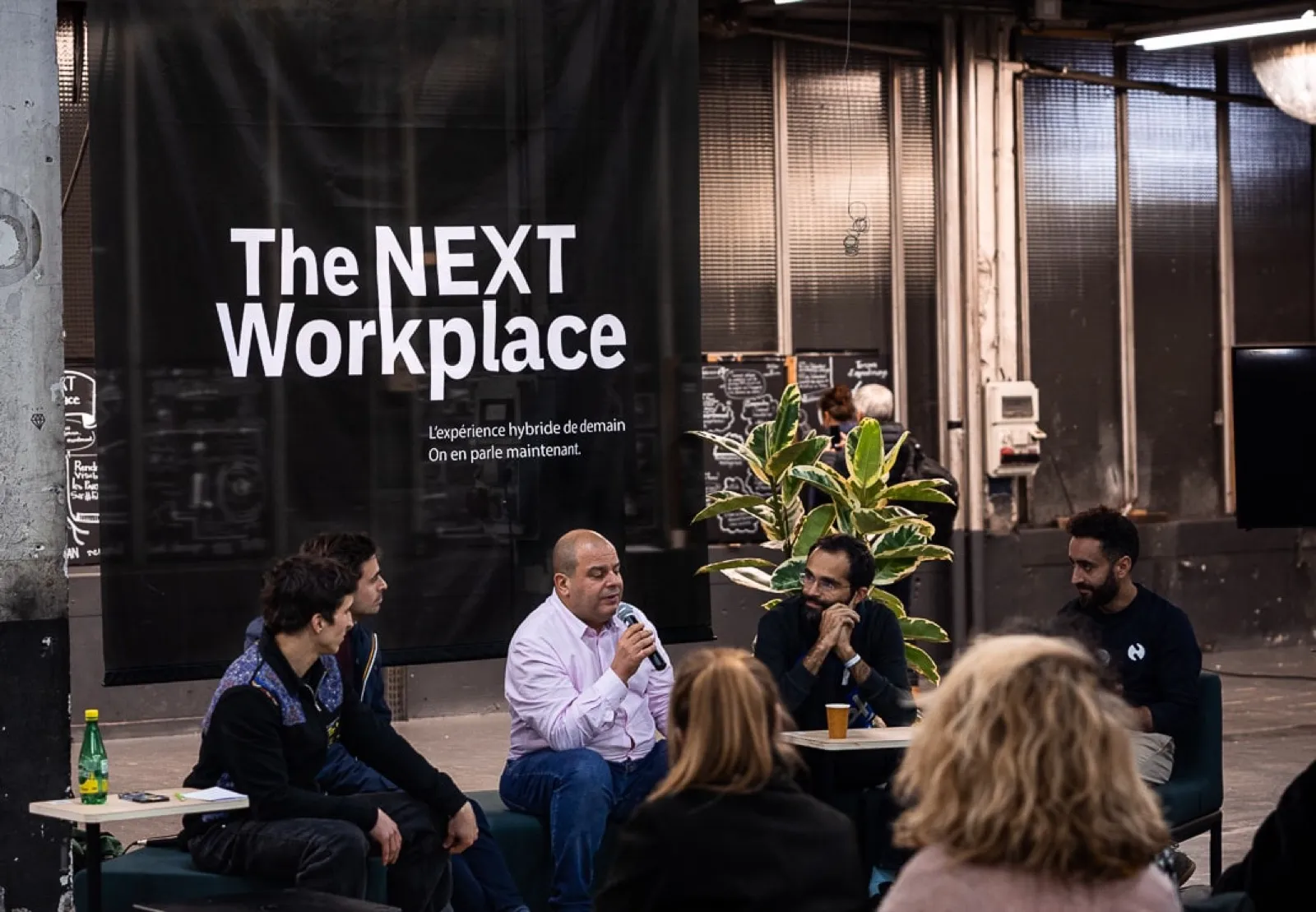
The key takeaway from The Next Workplace 2023: the office is no longer the default place to work, so it has to give people a reason to come in. To get there, the speakers all pointed to the same levers: trust, listening to employees, services designed locally, and small-scale tests rather than a grand plan imposed from above.
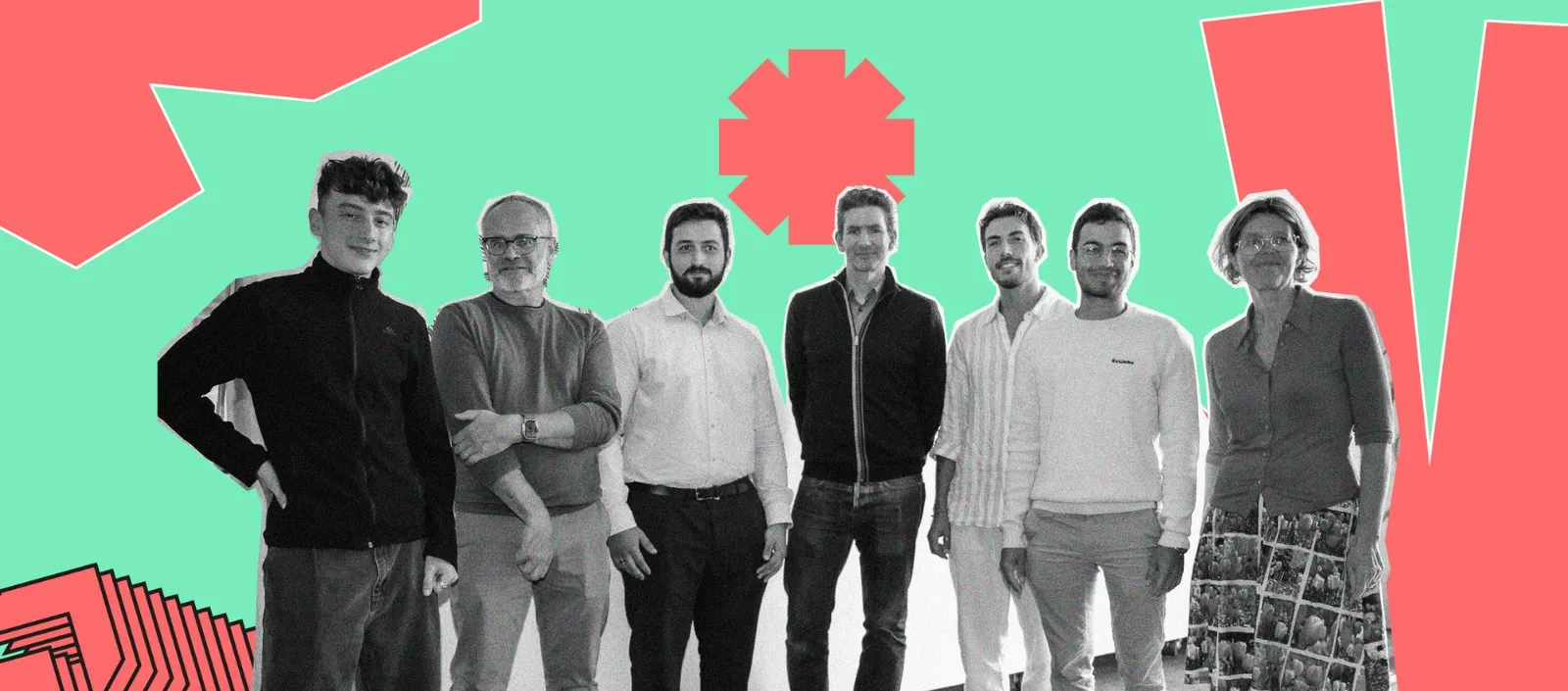
The Next Workplace is a collective of workplace start-ups, of which Osol is a founding member. Its first edition brought together three packed round tables around a simple question: what is the office for when you can work elsewhere? This report, published in January 2023, brings together the five angles we took away for preparing the workplace of tomorrow, followed by the key points from each round table.
1. Work is an experience, both individual and collective
Work is one sphere of life, but not the only one. For it to remain a safe place, it has to fit in with the others: sport, family, friends, professional relationships.
That starts with experience and emotion. Engaging the senses engages memory and creates memories. A holistic approach to employee wellbeing keeps people alert and builds their loyalty to the company.
It all begins with a physical, human welcome: a hello and a smile are signs of recognition that count. That is what opens up a relationship of rapport and complementarity at work.
2. A coherent range of services starts from real needs
Feedback, surveys, usage data: you start from what employees actually experience. It is a strategy to pursue locally, in response to the problems specific to each work environment. Ways of working vary by city, by neighbourhood and by profession.
To do this, some offer a form of hotel-style service, an attractive concept charged with emotion. With a real advantage: an “Instagrammable” office keeps the company alive on social media. Fun and passion go with it, two catalysts of emotion and connection.
To make these services coherent, you can wrap them in rituals that match each company's culture. Many fit-out examples show how to bring colour to premises, inhabit them and bring them to life.
3. Hybrid working is designed with intention
Deep down, we all fear that a lack of organisation will spoil the experience of the office of tomorrow. To counter that risk, you need a process ahead of the transition, and to open a dialogue to find solutions. Modularity has to be considered from the design stage.
The tools exist. You can decide how often teams meet in person, and devise team-building rituals that suit introverts as well as extroverts. With a tool like Slack, you can also set out a kind of charter: how many days on site or remote, and what to do there (meet clients or your team, or focus on production).
Flexible work is asynchronous: rhythm and cohesion over time are what make the experience rich. In the short term, you need to make the employee's day simple, without wasted energy or time. In the very long term, the emphasis will be on learning. That way, distance is no longer a threat but an opportunity.
4. HR and middle management drive the change
There are countless ways to test the transition, with a range of teams and more innovative profiles. As a first step, you can run tests team by team.
Middle management passes up the needs and ideas for change that spread by word of mouth among employees. These ideas then reach senior management, which is all the more receptive for having already been made aware of them.
For ideas to take hold, you can present hybrid working like this: it is not about adding layers of budget, but about changing costs. It takes a 360-degree view that transforms the spaces and services already in place instead of replacing them.
HR does the work of influence: sharing the vision, getting it approved, putting a plan in place and finding sponsors. Outside partners can be brought in as subcontractors. Above all, you have to dare to champion the idea, and believe in it.
5. Technology supports the transition
Many of the speakers at The Next Workplace use data collection tools, which make it possible to quantify what matters to HR. This data justifies intentions: you can test how employees react to the ideas you want to put in place.
You also need to offer choice, without bias, to cover more profiles: that is what creates real ownership. The office must not be limiting. It should offer the range of services available on the market, and that range is wide: from modular spaces to equipment, including more technical solutions such as those Osol develops.
Traditional offices are sealed off. The aim of hybrid working, on the contrary, is to create permeability. To achieve this, the speakers encourage “de-subordination” and “de-dulling”, through processes and tools that make the organisation of work more rigorous, and the workplace of the future more fluid and more accessible.
Round table 1: flexibility, the collective and company culture
- Kevin Bouchareb, Director Future of Work, Ubisoft
- Perrine Labesse, Head of Engagement and People Ops, BlaBlaCar
- Pamela Corbin-Audoux, Leadership, Diversity & Inclusion, Decathlon Technology
- Moderators: Martin Sauer, co-founder of Slean, and Simon Vergeot, co-founder of Uzfull
The new workplace is no longer between four walls. The trust employers and managers place in their employees determines team cohesion. To strengthen it, you can value individual interests through inclusion on the one hand and personalised services on the other, and draw on collective intelligence so that employees become proud ambassadors of the company culture.
According to Kevin Bouchareb, before Covid the French were bottom of the class in Europe for remote work, and almost certainly among the lowest ranked in the world. A cultural specificity explains this: presenteeism, and certain management practices. France is now in a catch-up phase, with new remote work agreements. First, in his view, you need to take back control of the narrative and revolutionise the social contract within the company.
The response is both cyclical and structural. Cyclical, because Covid forced the move. Structural, because it is part of a longer trend: the questioning of subordination at work. The mass creation of sole-trader businesses is evidence of this, with a real desire for independence. It is a new paradigm, born of the “YOLO” (You Only Live Once) mindset: work is one sphere of life among others.
Yet these ideas run up against employers' lack of trust. Agreements are often pushed through in a hurry: “remote work, yes, but”. Some allow two days of remote work a week, on condition that they neither precede nor follow a weekend or a bank holiday. Teams experience this precaution as being treated like children.
Pamela Corbin-Audoux draws a clear distinction between remote only or remote first and remote work pushed through in a hurry. First, there is logistics: when you go from one employee to fifteen working remotely, problems accessing equipment are common, and adjusting the budget takes real effort. Above all, there is the question of “trust & respect”. For her, distrust is unjustified: when someone isn't working, it shows, and unproductiveness cannot last.
How to keep a collective together at a distance
For Kevin Bouchareb, distance has to be thought through with team cohesion in mind. He takes the example of video games: in World of Warcraft, the community aspect dominates, and no boss can be defeated alone. Gathering around a common goal also often leads to meeting in person. Conversely, the coffee machine is an exclusionary ritual: it is the place of secrets, where information gets lost.
To encourage creativity, you need to decide which parts of the work are done remotely, alone or in a group, based on three factors:
- Understanding the project: being clear about the problems to be solved.
- Divergence of options: what can be done alone at home, and what needs feedback.
- Convergence of ideas: what is shared and decided as a team.
Given that remote work concerns 30% of the workforce, how do you make it work? Perrine Labesse starts by setting how often people meet. Onboarding, for example, is rethought at every stage. Events also serve inclusion in the broadest sense, by involving family and friends.
Pamela Corbin-Audoux broadens the point: inclusion (disability, neurodiversity, parenthood) and attention to mental and physical health improve everyone's psychological safety. At Decathlon Technology, an employee asked for enclosed shower cubicles. They benefited not only transgender people but also shy or modest employees.
To turn the head office into a hub, it is sometimes enough to rent spaces or organise coworking sessions in the places employees frequent near the offices. It is even possible to make pubs official workspaces. Opening up these informal places strengthens the sense of belonging to a shared culture.
Five models, from full office to full remote
Between full office and full remote, there are “50 shades of highways”, jokes Kevin Bouchareb, contrasting Goldman Sachs with Tesla. He identifies five models:
- Office first: work is designed first and foremost for the office, as with the campus strategies of Google or Apple.
- Full hybrid: the best of both worlds. Microsoft has introduced a split of working modes by activity.
- Flex: at Lego in Montreal, it's “come as you are”. The office becomes a hub designed for collaboration. A costly model, hard to optimise, but a huge competitive advantage.
- Remote first: work is designed for distance. The office is reserved for collaboration or becomes a showroom for specific activities (press, training).
- Full remote: remote work accounts for 99% of the work, and the remaining 1% is used for strategic alignment and for employees to meet.
“Talking to photos”: the criticism often comes up about virtual exchanges. In reality, social connection depends first on personal effort, and the constraints of distance weigh most on the most introverted. Hence the value of team-building rituals designed for everyone. For the speakers, the idea that remote work weakens bonds is an excuse: you have to act with intention and listen to employees. The “never normal” calls for an iterative process, with rules that evolve at the same pace as the work environment.
Decathlon Technology, for example, ran an international partnership scheme for a year and a half: employees travelling abroad could connect with other people and have access to back-up accommodation. The concept, built around “neo-nomad” partners and optimised accommodation, worked very well according to those who used it.
The practical advice comes down to three words: “Listen without delay!” Data collection tools exist for companies of every size. Collective intelligence goes further, provided you ask precise questions. Employees who are given more responsibility tell themselves: “I helped build it, so I'm responsible”. They then become good ambassadors.
Kevin Bouchareb concluded with the Assises du travail, an exciting initiative that opens a new forum on the nature and conditions of work. But to bring democracy to work, more precise questions are needed: how to reinvent social dialogue, take the individual into account, and engage voluntary commitment in the private sector, the public sector and the trade unions. Competitiveness is also at stake: qualified people stay where working conditions are attractive.
The workplace of tomorrow therefore has several attributes. It is decentralised: the 78% of workers who live in Île-de-France for lack of a better option need a workplace that suits them. It is no longer the default place to work. It becomes modular, allows individualisation in place of the standardised model, and it is inclusive. Quite simply, it becomes a sum of places and services.
Round table 2: the new role of offices
- Mary Jude Reidy, Global Workspace, Deezer
- Ghislain Phan Dinh, Workplace Strategy Manager, Doctolib
- Frederick Ros, Head of Digital Workplace, Amadeus
- Dominique Delattre, Director of Workplace Operations, Châteauform'Inside
- Moderators: Tom N'Guyen, co-founder of Café, and Maxime Cousin, co-founder of Osol
The office can no longer be just a place of work. Its role is becoming adaptive and modular, because it brings together a multitude of experiences and users. It becomes a project in its own right, one that involves every decision-maker, from senior management to the office manager.
What is the flexible office for? Above all, for living and working together. It is the foundation of the company's realities, and its subject is culture. It also has a structuring role: providing a place for work and for meeting, and tools. It offers everything you can't find at home: contact with others, professional exchanges, unique services. People come to confide, co-create, go out and express themselves.
The workplace is an intergenerational place, where experience doesn't fit into a single box. To personalise it, you need both a rigorous process and an informed dialogue. Inclusion in the broadest sense is not optional, because needs differ. Smoothing experiences according to profiles, for example with a stronger focus on service and food corners, also boosts competitiveness.
Making a day at the office an event
To redirect the transition, you need to rely on HR, then support the change through technology and through experience. Real-life tests, in the manner of a user experience approach, keep the project grounded in reality. Daring, being open to surprise, allowing yourself to reinvent: that is how you avoid mistakes, by running the strategy at the scale of the city and the neighbourhood.
How do you make employees want to “pay the price” of the commute? One answer: treat sites like cinemas or music festivals, as opportunities to organise events and bring teams together.
At Deezer, innovation comes through events that energise teams: 5 to 6 events are organised per team on site, which matters all the more because employees are also musicians. Full-time receptionists promote them and spread the word, report on them, gather feedback and offer everyone the experiences of their choice.
Another lever: feeding employees well. Workplace catering deserves real thought, because emotion also goes through the stomach.
The office used to mean obligation. It is now competing with other spaces. With a hotel-style approach to service, you can work on the sensory side, scents, the sound identity of the place, all the way to a form of hyper-proximity. The role of director of hospitality illustrates this parallel between office and hotel. To be attractive, the office even has to be Instagrammable, with the intention of turning it into a five-star hotel concept with modular lounges. And why not treat employees as if the company's revenue depended on it? Directly or indirectly, it does.
Office projects involve millions of euros. How do you fund something experimental? First recommendation: find a sponsor. Managers and HR need people in the office, so the experience interests them. With artists and creators, bringing in content related to their work generates enthusiasm. Employees are not always the source of projects, but they are the source of ideas. HR can experiment across departments, and surveys help gauge the mood. Ultimately, it is about offering choice, opening up solutions and talking.
Round table 3: HR strategy and talent retention
- Anselme Jalon, CEO of Numa
- Charles de Freminville, Chief People Officer of Lucca
- Tarik Lebtahi, Head of People Experience Lab at 3DS, Dassault Systèmes
- Moderators: Rafael de Lavergne, founder of Totem, and Maxime Eduardo, co-founder of Naboo
Starting point: only 14% of job offers on LinkedIn included a remote work component, and those offers attracted more than 50% of applicants. For Charles de Freminville, remote work has moved from a mention at the bottom of a profile to a feature displayed at the top of the job ad. The question now is how to highlight it.
Anselme Jalon has adopted full remote at Numa: 40 employees are on site 2 days a month. No distinction is made between those who come to the office and the nomads. The team works asynchronously and avoids unnecessary meetings. The two days on site are designed as mini-seminars, collective time that highlights personal passions, without talking about work.
At Dassault Systèmes, the format is 2 days of remote work a week. Tarik Lebtahi focuses on measuring how people feel, organising meeting points and planning key moments in the day, emphasising the pleasure of being on site. Remote work is not a selling point in itself there: the preference is to promote the company for what it is. Charles de Freminville adds that production can happen anywhere, but collaboration happens in person, in proportions that vary by profession.
Building connection and rituals
Anselme Jalon needs about ten desks occupied at all times to make the lease pay off, and 50 desks during collaboration time. He himself comes to the office for the quiet. The challenge is to rebalance without losing the social fabric. For Tarik Lebtahi, “there can be no people without space, no space without technology”. Those who stay with a company do so because of the five people they work with every day: connection is essential, and trust is built in person.
Charles de Freminville relies on rituals to build culture and fill the walls with memories. Lucca has given names to its interview rooms, such as the Amandre room or the Amèche room. In the audience, someone mentioned Capgemini and its on-site virtual world. Maxime Eduardo suggested favouring workplaces outside the office and offsites, an idea taken up by Charles de Freminville. Numa organises one offsite a month, which gives an organic rhythm to work and lets people rediscover each other's personalities. At Dassault Systèmes, fun and passion go together, two catalysts of emotion and connection.
Employees have become more demanding since the end of the lockdowns. It is an opportunity to rethink the office experience and bring in new players. At Numa, questions that are both professional and personal make onboarding easier.
Recovery, culture and employer brand
According to Rafael de Lavergne, 42% of employees don't feel energised at work. He compares recovery to that of athletes, and distinguishes between energy level, over which the company has little influence, and level of excitement, which reflects genuine interest. Lucca has no nap room, but works on acoustics, with library-style rooms, consoles and breathing spaces. Anselme Jalon is critical: energy is also found outside work, and culture is too often confused with corporate religion. His formula: “Get a life”. Tarik Lebtahi prefers to instil the joy of learning. Another view expressed: offering naps so that employees feel energised would be a bit extreme, lunch can also be a moment to relax, and the point is rather to teach employees to disconnect.
Maxime Eduardo pointed to a gap between employer brand and company culture, between what is said to attract people and what is actually done. What should you bet on? Tarik Lebtahi bets on the life of the company: the brand tells a story, but memory is shaped by lived experience. You welcome a candidate as you would an employee. The experience cannot be overplayed, because today everything gets shared, and authenticity is what resonates. For Charles de Freminville, it is team culture that makes the employer's reputation, not the other way round. For Anselme Jalon, “culture isn't written, it's lived”: at Numa, workshops and training are used to build it, with a shared process for feedback on experience. Rafael de Lavergne concludes: in the short term, simplify the employee's day; in the long term, invest in learning.
Complexity does not dampen determination
The road is long. But the audience at The Next Workplace showed it: the complexity of these subjects does not dampen its determination, a better work environment supports business growth, and it is by sharing knowledge that we will adapt our methods.
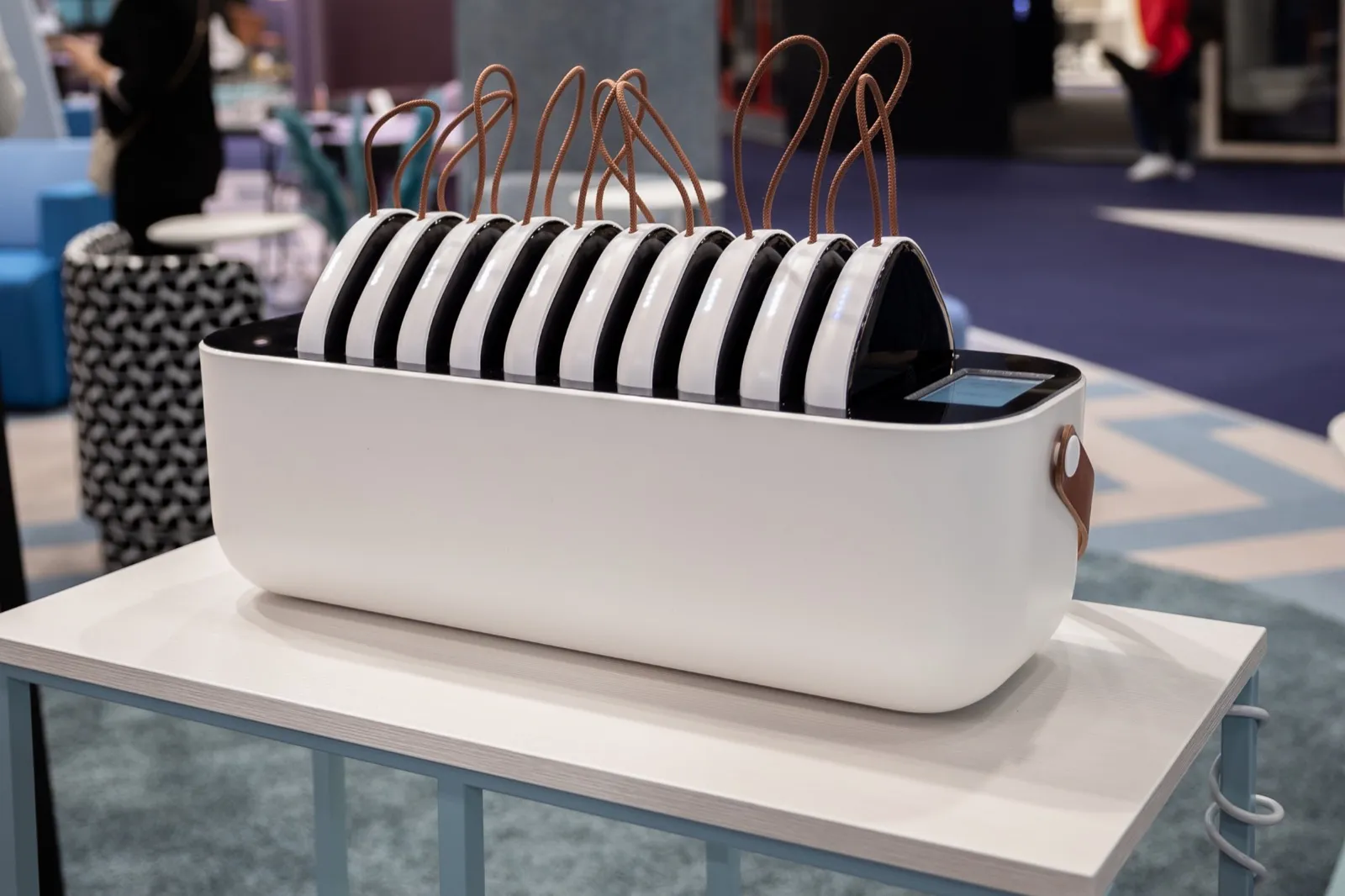
Among the services that make a flexible office liveable is power: being able to settle anywhere without looking for an outlet is what we call power flexibility. The second edition, in January 2024, continued these discussions on the question of the return to the office: read the report on The Next Workplace 2024.
Frequently asked questions
What is The Next Workplace?
A collective of workplace start-ups, of which Osol is a founding member. It organises meetings between workplace, HR and real estate leaders about the future of the office.
Who spoke at the first edition?
Leaders from Ubisoft, BlaBlaCar, Decathlon Technology, Deezer, Doctolib, Amadeus, Châteauform'Inside, Numa, Lucca and Dassault Systèmes, across three round tables moderated by founders of Slean, Uzfull, Café, Osol, Totem and Naboo.
What are the five working models presented?
Office first, full hybrid, flex, remote first and full remote, from the most on-site to the most remote. Kevin Bouchareb illustrated them with Google, Apple, Microsoft and Lego.
What was the main lesson?
The office is no longer the default place to work. It has to offer what you can't find at home: encounters, services, a culture you experience first-hand.
Should days in the office be mandatory?
The speakers agreed on one point: rules imposed without trust are badly received. It is better to decide with teams when to meet, and what for.