The history of a workspace: from antiquity to the present day
Remote work, shared workshops, skyscrapers, open-plan, flex office: offices replay old ideas. From ancient Rome to today, and the last fixed constraint.
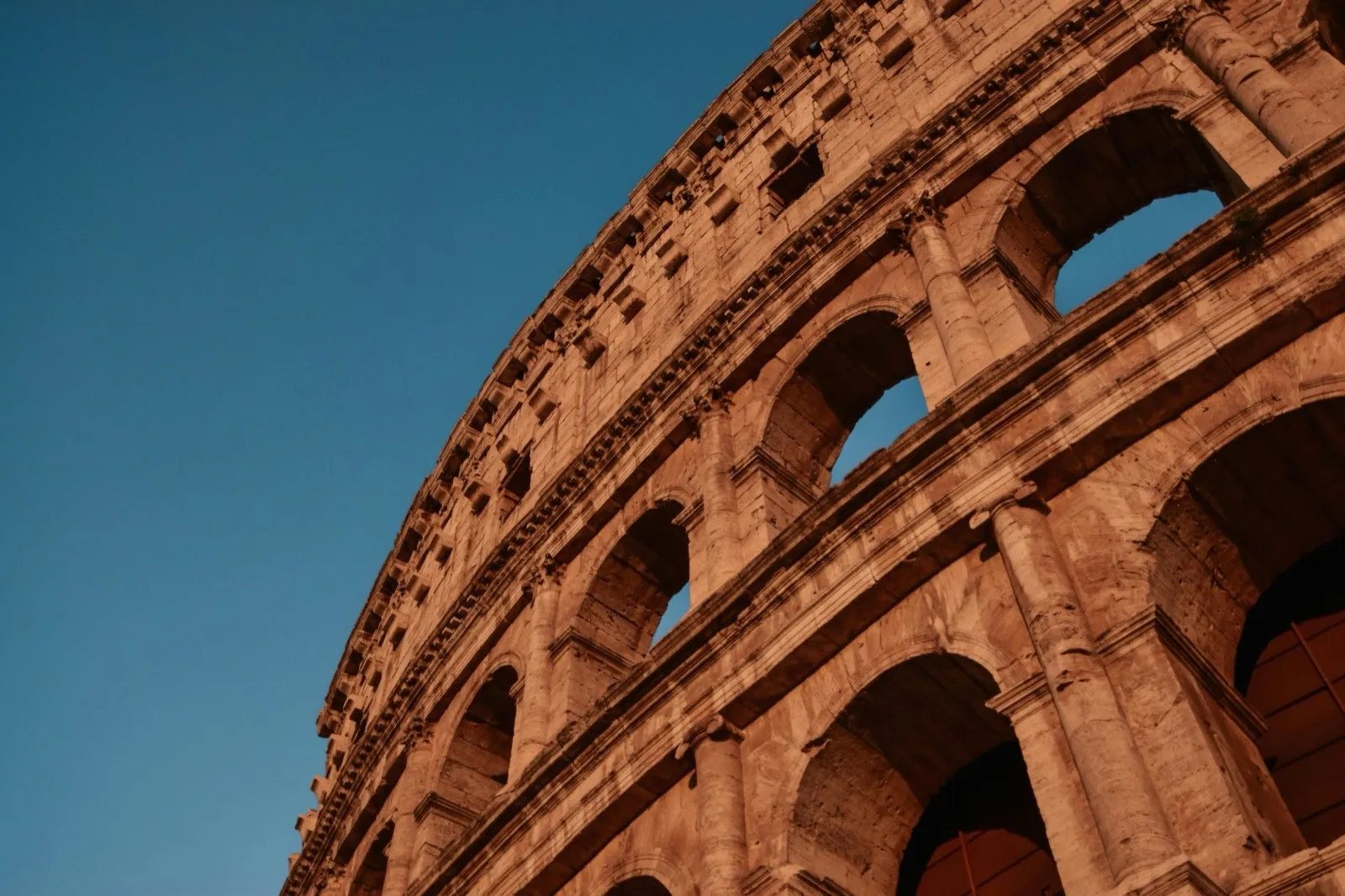
The workspace has always followed the tools and organisation of its time: the Roman house, the Renaissance workshop, the industrial office building, the open-plan office, then the flex office. Many practices we think of as modern, such as hybrid working or collaborative spaces, actually have very old roots.
This journey through time helps us understand today's offices. And to see what, even now, stops them from being truly flexible.
The Romans already worked from home
Working from home is nothing new. In the Roman town house, the domus, a room called the tablinum served as an office. The head of the household managed his affairs there, kept his important documents and received his “clients” during the salutatio, the meeting between the patron (patronus) and the people under his protection.
It was not reserved for the elite. Craftsmen and traders often worked in a taberna, a shop built into their home. Private and professional life shared the same walls, a boundary as blurred as in some hybrid models today.
A small anecdote: we also owe to Rome the Latin word officium, meaning duty or service, which gave English the word office.
The Renaissance invented the collaborative workshop
In the Renaissance, the artist's workshop, the bottega, worked like a small business: assistants, apprentices, commissions to fulfil and contracts. It was a place of production, but also of skill sharing.
There were often two spaces. The studiolo was reserved for reflection and intellectual creation. The bottega, open to the street, was where the work was carried out. This duality between reflection and production can still be found in our offices, where focus spaces sit alongside spaces for teamwork.
The Guilds of Saint Luke, which brought together painters, sculptors, engravers and printers, offered their members a framework for learning and a degree of security. Today's corporate mentoring and training programmes carry on the same idea, as do coworking spaces. Places such as Flex-O offer shared spaces where professionals from a variety of sectors meet, exchange ideas and collaborate. Like Renaissance workshops, they provide flexible infrastructure and shared resources, which make cooperation and continuous learning easier.
Industrialisation gave birth to the office building
History often dates the first administrative building to 1726, with the Old Admiralty Office in London. But it was with industrialisation, at the end of the 19th century, that the organisation of work changed radically.
Factories drew workers towards the machines. Large cities, for their part, filled up with office buildings. Elisha Otis's safety lift (1853), electric lighting and ventilation made skyscrapers possible, maximising the use of urban space. Chicago's Home Insurance Building, built in 1885, paved the way for vertical offices where hundreds of employees could be grouped together. In the early 20th century, towers such as the Chrysler Building became their symbol.
These vertical offices reflected the hierarchy: executives occupied the upper floors, junior staff the lower ones. Typists and accountants were grouped together, and executive spaces borrowed the codes of aristocratic architecture (private study, antechambers, small and large drawing rooms), while the office wings became increasingly uniform.
At the same time, the telegraph and then the telephone made it possible to communicate without being on site. Managers and executives could exchange quickly with their teams or partners. Some professions, such as journalists and writers, were already taking advantage of this: reporters sent their articles by telegraph from different places, without going back to the newsroom. A true forerunner of hybrid working.
The 20th century standardised the office
In the mid-20th century, the open-plan office took hold by adopting the principles of Taylorism, which is based, according to vie-publique.fr, on “a horizontal division of labour, in which each worker repeats a small number of tasks”.
The office became an administrative factory, easy to manage and economical. The layout followed the organisation chart: each person's position and floor space reflected their rank. Managers had a closed office, everyone else a “minimum cell”. This was the advent of movable partitions.
Crises and digital technology freed the workstation
In the 1990s, a major property crisis left developers with vast stocks of empty offices, 5 million m² in the Île-de-France region alone: the first “office wastelands”. At the same time, companies were equipping themselves with personal computers, then the Internet.
In 1997, Andersen Consulting (now Accenture) drew a new idea from this. Its consultants spent 80% of their time at clients' premises: they no longer had a fixed desk and booked their space by the day or for a few weeks. The flex office was born.
It spread first to the big consulting firms, then took hold in France around the 2010s, adopted notably by Sanofi and Société Générale. It paved the way for remote work and coworking spaces.
The environment became a design constraint
At the end of the 1990s, the quest for efficiency met another imperative: environmental impact. After the signing of the Kyoto Protocol in 1997, the energy performance of buildings became a priority for architects and engineering consultancies.
Management evolved in parallel. “Project-based management” valued autonomy, creativity and responsiveness, qualities well suited to the new workspaces. To go further on this subject, see our article on Google's eco-friendly offices.
What is still fixed in the office?
Almost nothing. In two thousand years, every constraint has eventually fallen. The assigned desk disappeared with the flex office. The network cable disappeared with Wi-Fi. Partitions became movable, and so did furniture.
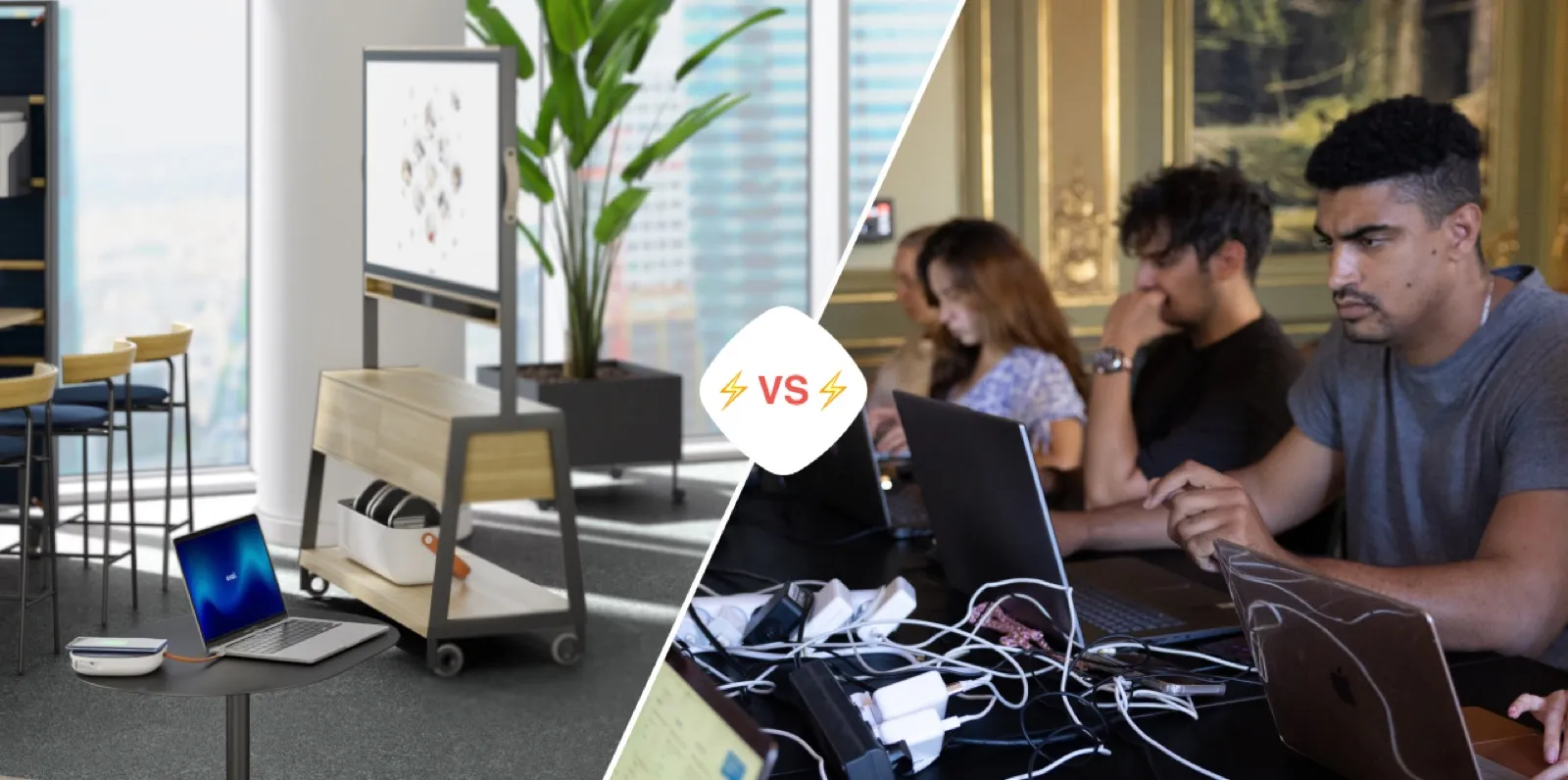
Power remains. Outlets are still where the electrical plan put them, in the wall, the floor or the table. Very often, they are still what decides where people sit and which spaces stay empty when laptop batteries run low.
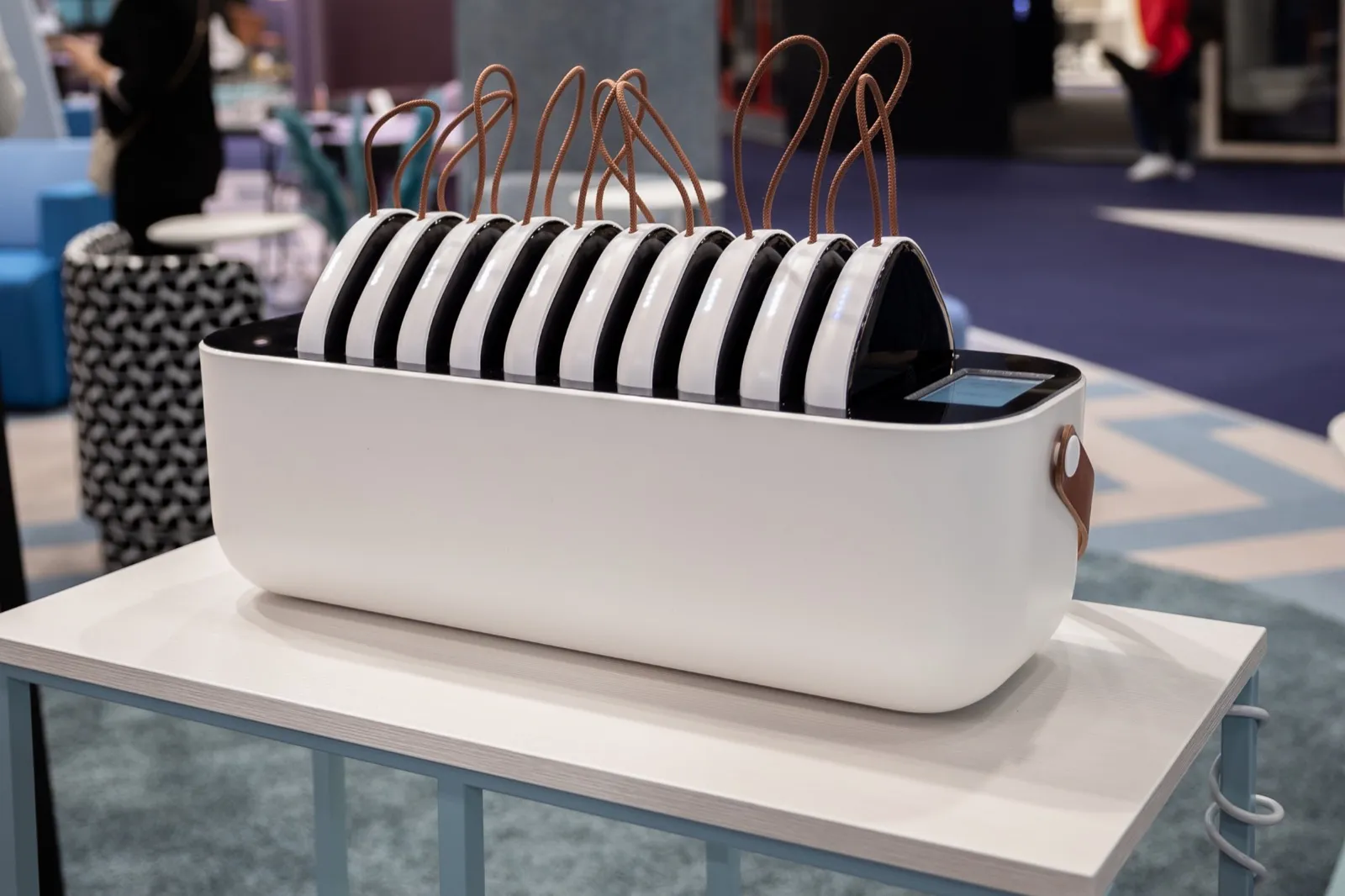
This is the last step in this long history: power flexibility, which makes power as mobile as employees. This is what Osol is building with a mobile power network: shared batteries you take when you arrive and return when you leave.
Frequently asked questions
Did remote work exist in antiquity?
In another form, yes. In Rome, the tablinum served as an office in the home, and craftsmen worked in a taberna built into their home.
Where does the word “office” come from?
From the Latin officium, meaning duty or service.
When did the flex office appear?
In 1997, at Andersen Consulting, for consultants who spent 80% of their time at clients' premises. It spread in France around the 2010s.
What is the last fixed constraint in the office?
Power. The network, furniture and desks have become mobile, but outlets remain fixed by the original electrical plan.