Going green: the example of Google's eco-friendly offices
An eco-friendly office cuts its impact and improves employee health. What research says, what Google learnt from biophilic design, what any company can do.
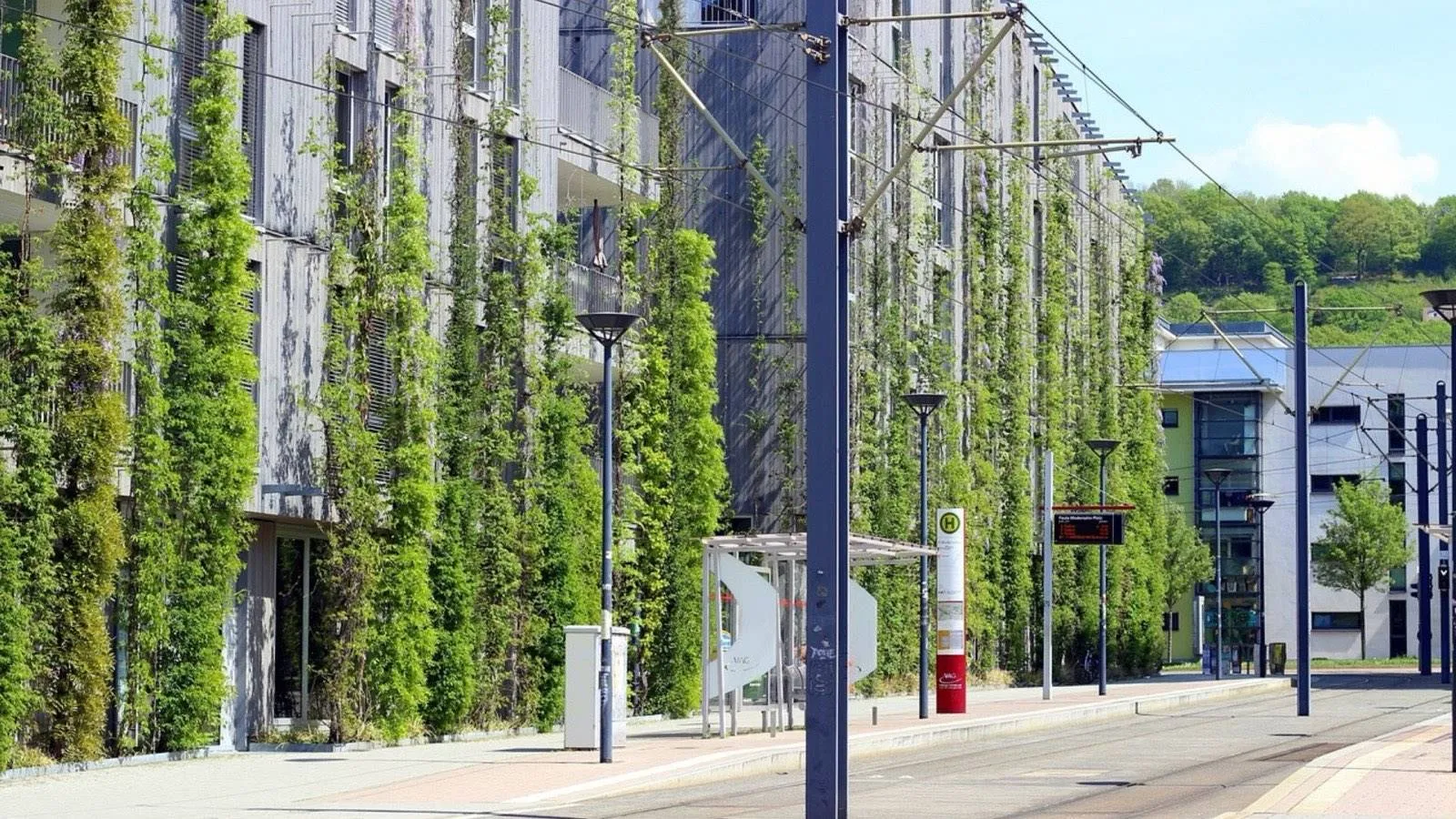
An eco-friendly office is a workspace designed to reduce its environmental impact while improving employee health and wellbeing: natural light, fresh air, plants, natural materials, low energy use. Google is one of the most closely followed examples, with a biophilic design approach launched in 2016 and continued through to the Bay View campus, which opened in 2022.
The subject is not just about aesthetics. Several studies link these layouts to concentration, health and job satisfaction.
Where does the eco-friendly office come from?
The green office has not always been a given. At the beginning of the 20th century, offices were organised according to the principles of Taylorism: large open floors designed for efficiency, often at the expense of wellbeing. The model was quickly criticised for its dehumanising approach.
The turning point came in the 1960s in Germany, with the “Bürolandschaft”, or office landscape. Spaces became more flexible, and plants were used to divide up space organically. It was the first office to consider both social interaction and wellbeing, and the direct ancestor of today's green office.
For the full history, from ancient Rome to the flex office, see our article on the history of the workplace.
Where do eco-friendly offices stand today?
They have become widespread. According to a Knight Frank report, London has nearly 3,000 green-certified buildings. In Singapore, around 90% of Grade A offices are certified. In Seattle, the Bullitt Center is often cited as one of the most sustainable buildings in the world.
Two forces explain this movement. On one side, pressure to reduce carbon footprints, from clients and regulators alike. On the other, the conviction that employee wellbeing matters for engagement and talent retention.
Do green offices improve concentration?
Several studies point that way. A study by the University of Exeter found that adding plants to a workspace could increase productivity by 15%.
Another, conducted by the Harvard T.H. Chan School of Public Health, measured cognitive scores that were on average twice as high in green offices as in conventional offices. The clearest gaps were in crisis response (+97%), strategy development (+183%) and information usage (+172%).
Three effects are generally put forward:
- Air that is perceived as better: people concentrate better and feel less tired.
- Less stress: greenery has a calming effect, which supports motivation.
- A more pleasant setting, which makes people want to come in and stay.
And employee health?
Green offices also act on health, through three levers:
- Biophilic design: plants, wood, natural materials. The connection with nature reduces stress and mental fatigue.
- Air quality: plants increase humidity and reduce dust, which brings relief to people with allergies or asthma.
- Natural light: it helps regulate the circadian rhythm, and therefore sleep and mood, and reduces eye strain.
What is biophilic design?
Biophilia, literally “love of living things”, refers to humans' natural attraction to nature. Biophilic design starts from a simple idea: a visible connection with nature improves wellbeing, reduces stress and stimulates creativity.
Google turned this approach into a method. In 2016, the company launched a study to apply it to its offices. It begins by asking occupants about their connection with nature and their access to the outdoors, then acts on three levers:
- Natural elements: daylight, water, natural materials.
- Natural patterns: shapes and textures inspired by nature.
- Refuge and prospect: areas that offer an open view while giving a sense of protection.
In Tokyo, a red meeting room, considered stressful, was transformed on the model of a traditional Japanese house: earthen walls, known for filtering the air, hemp floors, and a view of an autumn forest. Occupants reported a much calmer experience.
What results did Google measure?
The first results of Google's biophilic initiatives show positive effects on employees:
- 13% more satisfaction with the colours and textures of the workspace.
- 15% more people feel that their environment stimulates their creativity.
- 11% more overall satisfaction with their workspace.
For Google, these figures show that biophilia improves wellbeing, productivity and job satisfaction alike. By creating environments that encourage collaboration and innovation, the company illustrated the tangible benefits of green offices. This study went on to inspire many of the group's other eco-friendly offices.
Bay View, Google's eco-friendly campus
Opened in 2022 in Silicon Valley, Bay View is the first campus built entirely by Google. The company was able to rethink the workspace from the ground up.
It applies the same biophilic principles: greenery, natural light and a view of the outdoors from every desk. Automated blinds regulate direct light, and the ventilation runs on 100% outdoor air.
On the energy side, the campus uses “dragonscale” solar panels to generate as much renewable energy as possible. The campus is aiming for Living Building Challenge certification, which requires all non-potable water needs to be met with water recycled on site. The kitchens are fully electric, with no gas.
At the time this article was published, data specific to Bay View was not yet available. But in other Google green offices, internal surveys show that employees feel more creative and more satisfied overall with their workspace, which often translates into lower absenteeism and better talent retention. Bay View shows how far an environmental approach can go when you start from a blank sheet.
How can you make your offices greener without building a campus?
A few measures are within reach of every office:
- Easy-going plants: pothos, succulents, ferns. Little maintenance, a real effect on the atmosphere.
- Better ventilation, to refresh the air and lower CO2.
- Lower energy consumption: switch off screens, printers and lights at the end of the day, and turn on energy-saving modes.
- Less electrical work at each reconfiguration, thanks to a mobile power network rather than new outlets.
- More sustainable supplies: recycled paper, gentler cleaning products, refillable cartridges.
- Less paper: print only when necessary.
- A few days of remote work a week, which cut down on commuting.
The energy point is often overlooked. New ways of using the office mean regular reconfiguration, and every conventional reconfiguration means cables, wall chasing and construction waste. Power flexibility allows spaces to evolve without touching the electrical plan: that is what Osol does.
Key takeaways
An eco-friendly office is not a luxury reserved for large companies. It is a design choice that serves both the planet and the people who work there. Google's example shows that sustainability and job satisfaction go hand in hand, and most measures start small.
Frequently asked questions
What is an eco-friendly office?
It is a workspace designed to reduce its environmental impact and improve employee health: natural light, fresh air, plants, natural materials and low energy use.
What is biophilic design?
It is a way of designing spaces that recreates a connection with nature: natural elements, patterns inspired by living things, areas of refuge and prospect. Google has applied it to its offices since 2016.
Do plants in the office have a measurable effect?
According to a University of Exeter study, adding plants to a workspace can increase productivity by 15%.
Where should you start to make your offices greener?
With simple measures: plants, better ventilation, less wasted energy, less paper, and reconfigurations that avoid electrical work.