Destination work: which direction to take?
There is no ideal office, but you can balance your range of spaces. A LeLab round table on the office's purpose, with BlaBlaCar, CNRS, Covivio and InSitu.
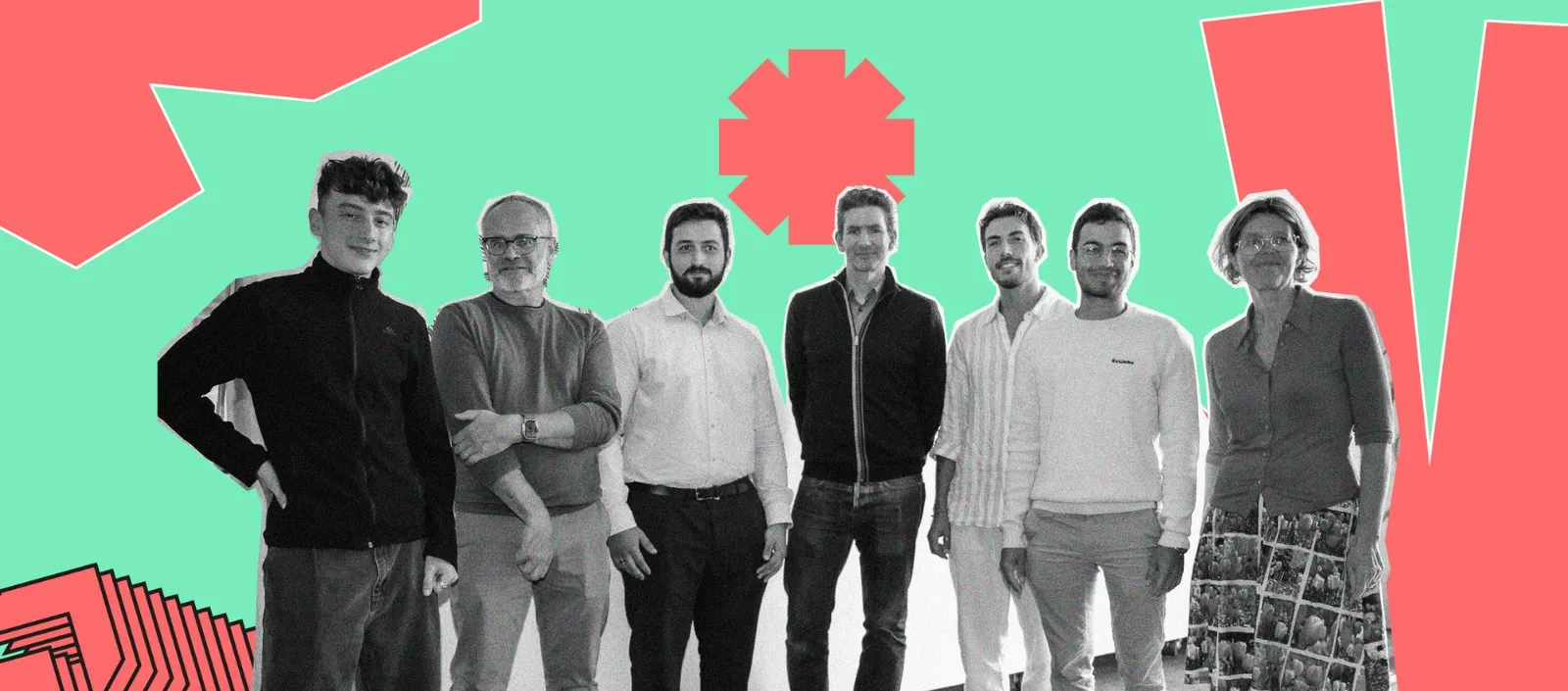
There is no ideal office, because there are too many frictions, but you can avoid a sense of derealisation by balancing your range of spaces and allowing yourself a degree of flexibility. That was the conclusion of a round table organised by LeLab on the purpose of the office, with Muriel Havas (BlaBlaCar), Danièle Linhart (CNRS), Céline Leonardi (Covivio) and Stéphane Adnet (InSitu).
There is no ideal office, because there are too many frictions, but you can avoid a sense of derealisation by allowing yourself some flexibility, a form of letting go. Hence the importance of balancing your range of spaces. This is the subject of a round table organised by LeLab on the purpose of the office. Produced by Workplace Magazine in partnership with InSitu and Covivio.
Speakers:
- Muriel Havas, director of real estate & facilities, BlaBlaCar
- Danièle Linhart, sociologist, emeritus research director, CNRS
- Céline Leonardi, director of leasing and UX design, Covivio
- Stéphane Adnet, managing director, InSitu
The office: why make it a destination?
There is something of the holidays about this question…
The destination of work, according to the CNRTL definition, is the act of assigning the place of production to its users. The result of this act is classically embodied by the office.
“It is not simply a semantic addition, or even a cosmetic device, it reflects a real change in society.” Stéphane Adnet, Managing Director, InSitu.
Published in 1896, Louis Sullivan's article “The Tall Office Building Artistically Considered” describes the office building as a “type among all the other types of buildings”, summed up as a tripartite vertical division enclosing “an indefinite number of ‘typical’ floors, stacked one on top of the other, identical to one another”.
Offices divided up in this way disorientate us: it is not easy to feel at home in them.
To counter their desertion, now that workers can choose between staying at home and coming to the office, some employers are betting on the office as a product.
To restore the office's prestige, they decide to transform their service offering by modelling it on the most highly rated hotels.
In this context, it seems hard to free these places from their dichotomy: between their productive purpose and their commercial drive, the balancing act is rigged.
How do you make work a destination without turning it into a purely marketing argument?
LeLab's guests agree that a place must be designed by dedicating it to its users, in the broadest sense.
They still have to be motivated.
Between the needs of companies, which worry about optimising their square metres, their level of attractiveness and the contractual flexibility they must now offer, and those of employees, who are looking for a special Hub with turnkey solutions…
One objective links them: to adopt (and get others to adopt) this shared place of culture.
Frictions
There is no ideal office
In an ideal environment, everyone is aware of and sensitive to each other's needs, and acts accordingly.
For practical reasons, it is important to find a balance between individual needs, those of the team and those of the company.
While employees look for an easy-to-use, turnkey solution, teams have to organise themselves to work effectively during critical phases of a project.
Before the workplace becomes a “second home”, it is possible, as a first step, to meet the employee's physiological and neurological needs, so as to guarantee a flexible, seamless experience throughout the day.
Elton Mayo's experiments and the Hawthorne effect showed that by making slight changes to the work environment, such as lighting and the positioning of machines, productivity, among other things, can be increased.
This can mean changes as modest as a fresh coat of paint.
Except that, for these changes to be truly flexible, it is not technically possible to plan for everything.
Besides, in the race, it is:
First come, first served
“There is a feeling of subjective precariousness. I would even say a spatial precariousness.” Danièle Linhart, sociologist, emeritus research director, CNRS
To find a good spot, it is first come, first served.
When a company is well prepared, it provides a room booking service. Yet this is one more friction in adopting the office. Between using it and making it your own, it is one more effort asked of people, or one too many.
With all that, do you really feel at home there?
Besides, between the smell of food, the sound of footsteps and conversation, colleagues coming and going and accusing looks, the injunction to discipline and proper professional conduct is still strongly felt.
Boundaries and derealisation
Alone in front of the screen, and faced with these injunctions, the worker can very quickly disengage.
In a setting where, for example, they no longer have an assigned desk (the concept of desk-sharing, the shared office), this trend, sold as such, can quickly become alienating.
Not giving priority to individuals is a strong choice in terms of layout.
And when that is the stance taken, employees will judge attention to detail more harshly.
Because it carries risks, particularly in terms of quality of working life (QWL).
The boundary between personal and impersonal space widens the gap between workers.
They are put in competition with one another, and each with themselves.
Another difficulty arises when everyone is lumped together. The most vulnerable groups, more likely to feel alienated, experience these injunctions to discipline as infantilising.
But since you cannot please everyone, Stéphane Adnet asks:
“How far should we go in meeting their needs?”
Alternatives
Choosing
Employees do not come to the office for the space, but for the mission they have been given.
If the content of their work aligns with their ethics, they will stay, whether or not there is a wider range of services.
This is what Muriel Havas, director of real estate & facilities at BlaBlaCar, explains.
- Weigh up the pros and cons: democracy at work, involving people in every decision, electing representatives.
- Ensure consistency between the “company shop window”, in other words its offices, and the rules applied within them.
Let us remember the famous adage of the American architect Louis Sullivan: “Form ever follows function”.
The plans on which your company's place of productivity will be built should be drawn up according to the missions and needs of its workers, rather than for aesthetic or superficial reasons.
Autonomy versus constraints
When programming the building, an interesting option is to design each floor as an independent unit, allowing greater flexibility.
This approach is used notably by BlaBlaCar, which can then lease or open its spaces to other companies if needed. However, regulations on establishments open to the public (ERP) still limit this form of hybridity.
So, to encourage autonomy and openness to the outside world, it is important to establish a clear social contract from the start, by defining the rules for how the office works.
To avoid obstacles, co-creating with employees to encourage everyone's involvement and commitment to the shared project has paid off for BlaBlaCar. And it all happens at recruitment: making sure that employees' skills match the missions and roles on offer, and that the career path suits their aspirations.
Leaving room for spontaneity
From this pooling, from decisions shared between management and employees, a notion of territory emerges.
And this trend looks set to last: integrating the building into its wider ecosystem is one of the demands of employees who want to get more involved in their neighbourhoods.
The emergence of third places is a key element of this trend. It involves:
- Mixed uses: places anyone can use, shared projects.
- Consultation with local residents to deliver projects that meet their specific needs, particularly in terms of shops.
- Focusing on individual and community needs to create a balanced and sustainable working environment.
With this strategy, festive events and get-togethers, signs that users have adopted a space, become spontaneous.
Owning the choice
Space does not bow to fashions, but to its users. It is something people make their own.
If it is conceived as a product, if it has to be the subject of a marketing campaign, then employees' expectations will be all the more demanding. If terms linked to the building as a product are used (consumer, tenant, borrower), then material aspects and comfort will become conditions for a good balance. In that case, by leaving users a healthy margin of “disobedience”, you give them the chance to picture themselves in their workplace. A workplace director (DET), for example, might choose not to keep an inventory, and let furniture travel from one floor to another.
If, on the other hand, you decide to let it live organically, you balance this with a solid charter and a strict regulation policy to ensure that individual and shared needs are respected.
It is a matter of moving the flexibility slider among the criteria the company has chosen to prioritise, and fully accepting that others will be set aside.
And there are as many possibilities as there are users.
A debate to follow.
Frequently asked questions
Is there such a thing as an ideal office?
No, according to LeLab's guests: there are too many frictions. You can, however, avoid a sense of derealisation by balancing your range of spaces and allowing yourself a degree of flexibility.
Why do employees come to the office?
According to Muriel Havas, director of real estate & facilities at BlaBlaCar, they do not come for the space but for the mission they have been given. If the content of their work aligns with their ethics, they will stay, whether or not there is a wider range of services.
How does BlaBlaCar make its offices more flexible?
By designing each floor as an independent unit, which makes it possible to lease or open the spaces to other companies if needed. Regulations on establishments open to the public (ERP) still limit this form of hybridity.